
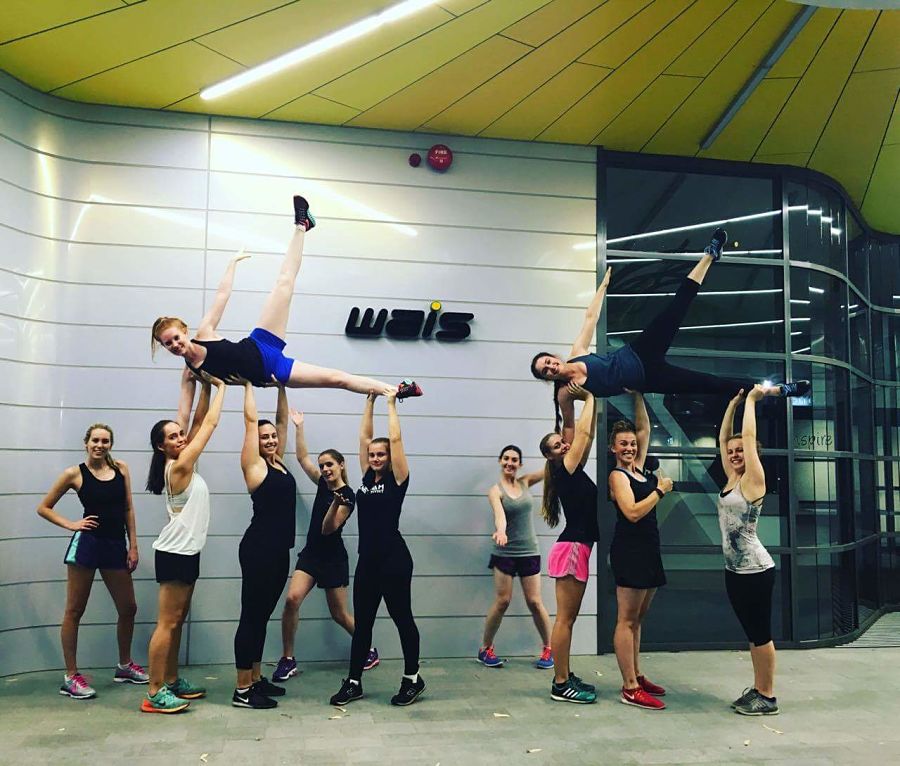
The Western Australian Institute of Sport recently played host to a unique training preparation for a group of elite synchronised ice skaters, preparing to tackle the world championships in Colorado Springs, USA.
With not an ice rink in sight, at first glance, the WAIS connection for the Infusion synchronised ice skating squad’s final preparations might seem strange, yet the precision is in the detail, as the program’s head coach Genevieve Hohnen explained.
“Infusion are the current reigning Australian National Senior Champions. They are preparing to compete at the World Synchronised Skating Championships in Colorado Springs in April 2017,” she said.
For those unfamiliar, Colorado Springs is 100km south of Denver, located some 6,000 feet – or 1.6km above sea level. From a high performance perspective, this presents adaptation challenges for competitors travelling from sea level areas such as Perth.
“WAIS was a suitable fit as we needed a way to get the team prepared for the effects of altitude in Colorado Springs,” Hohnen said. “I was also keen to ensure that the skaters got the very best advice and training and I felt that WAIS was able to provide that.”
With a squad boasting 17 athletes ranging in age, from 17-25, a program designed by WAIS Physiology professionals saw the girls simulate the cardiovascular demands of competition at a simulated altitude inside the WAIS environmental chamber. Temperature and humidity were also set to those specifications usually found within ice rinks.

Watt bikes, treadmills and rowing ergometers all formed part of the exercise rotation circuits that followed an interval style of training. These alternating work-to-rest ratios challenged the athletes to perform close to their maximum output for a set period of time before a short rest, whilst altering the length of effort against time of recovery.
Hohnen said the sessions at WAIS (two a week over a month long period) were conducted in addition to their existing on ice sessions as the group developed a specialised preparation for their championships.
“In addition to their normal training we have built in sessions in the WAIS altitude chamber. The program was designed to gradually increase the altitude they were training at. The sessions have consisted of a variety of high intensity exercises on a rotation program with an increasing altitude over a number of sessions.”
As for the results, Hohnen said her group had embraced the opportunity and looked forward to putting their preparation into practice.
“They have loved it,” she said. “The team has found that their capacity to train has increased and their performance has lifted.”
“Synchronised skating is a sport where athletes need endurance fitness in order to train and also high intensity fitness in order to perform. The chamber and the trainers have been a huge asset as we prepare for the World Championships.”
Hohnen described synchronised ice skating as the fastest growing form of figure skating and believes it gives competitors and fans alike, a unique sense of performance.
“Synchronised ice skating is a team event that incorporates many of the different elements of all the figure skating disciplines. Our athletes have to be all-rounders in the truest sense of the word.”
“It also incorporates elements of overhead lifting and formation work, much like a ballet company might use. From a spectators’ perspective it is a constantly evolving and changing program, designed to entertain and push athletes to their limits.”

Whilst the Infusion squad has embarked on a journey some 14,000km away, to the other side of the world, the staff at WAIS will be wishing them well back home in Perth and look forward to learning of their results.
To learn more about the services available to high performance sporting groups through the Western Australian Institute of Sport, or to speak with booking officers, contact WAIS on 9387 8166 or email: wais@wais.org.au
You can also view further details online.